£4.3billion energy debt pushes households into skipped meals and risky loans
British households owe almost £4.3billion to their energy suppliers, and new research from the End Fuel Poverty Coalition suggests more than three in 10 people are either in debt to their supplier or worried they will miss a payment. The Daily Mirror reports that the debt pile has more than doubled since Russia's invasion of Ukraine sent wholesale energy costs soaring. Campaigners say the people carrying this debt are ordinary families, not those who could pay and simply choose not to.
The poll also points to something more worrying than unpaid bills. Among those in energy debt or worried about falling behind, one in eight say they owe money to someone who makes them feel scared. That rises to a quarter (24%) of those already in arrears, according to the coalition.
The findings come as bills climb again. According to the Mirror, Ofgem's energy price cap rose by 13% to £1,862 a year for a typical dual fuel household paying by direct debit from July 1, up from £1,641.
How energy debt is forcing families into drastic cutbacks
The coalition's research looked at what people already in energy debt had done over the past 12 months to cut their spending. Some 32% had used less energy by turning the heating off or taking shorter showers, and 25% had kept their home colder or warmer than was comfortable. A further 21% had missed rent or mortgage payments, the same share that had skipped meals, while 18% had turned to a foodbank to help cope with energy costs or arrears.
Simon Francis, coordinator of the End Fuel Poverty Coalition, said the figures "lay bare the true cost of years of failure to fix energy debt caused by the sharp increases in bills". He called it "a can't pay crisis, not a won't pay one" and said very few people in energy debt live in high-earning households. He also accused the "price shock profiteers" of posting billions in profits while millions struggle, and said the energy industry "must be made to contribute to clearing this debt mountain".
Frazer Scott, chief executive of Energy Action Scotland, said too many households are "saddled with debt to their energy suppliers which they simply cannot repay". He added that government, industry and its regulator "have provided no effective plan to reduce this debt and help to keep people warm and safe in their homes".
Parents and disabled people are hit hardest
The burden is not shared evenly. According to the poll, 45% of parents with a child under 18 are in debt or worried about falling behind on their energy payments, as are 35% of disabled people. Among everyone in energy debt, the average amount owed to a supplier is £750.
The debt charity StepChange says its own figures show the problem growing over time. Emily Whitford, senior public policy advocate at the charity, said average energy arrears among its clients have surged by 79% over the last five years, an increase of over £1,000 per client. She said falling behind on other essential payments, or cutting back on food and heating to keep up, are "not uncommon".
For a typical household on direct debit, the July cap rise added £221 a year, or £18 a month, according to the Mirror. Households already behind on their bills face that extra cost on top of what they owe.
Key numbers
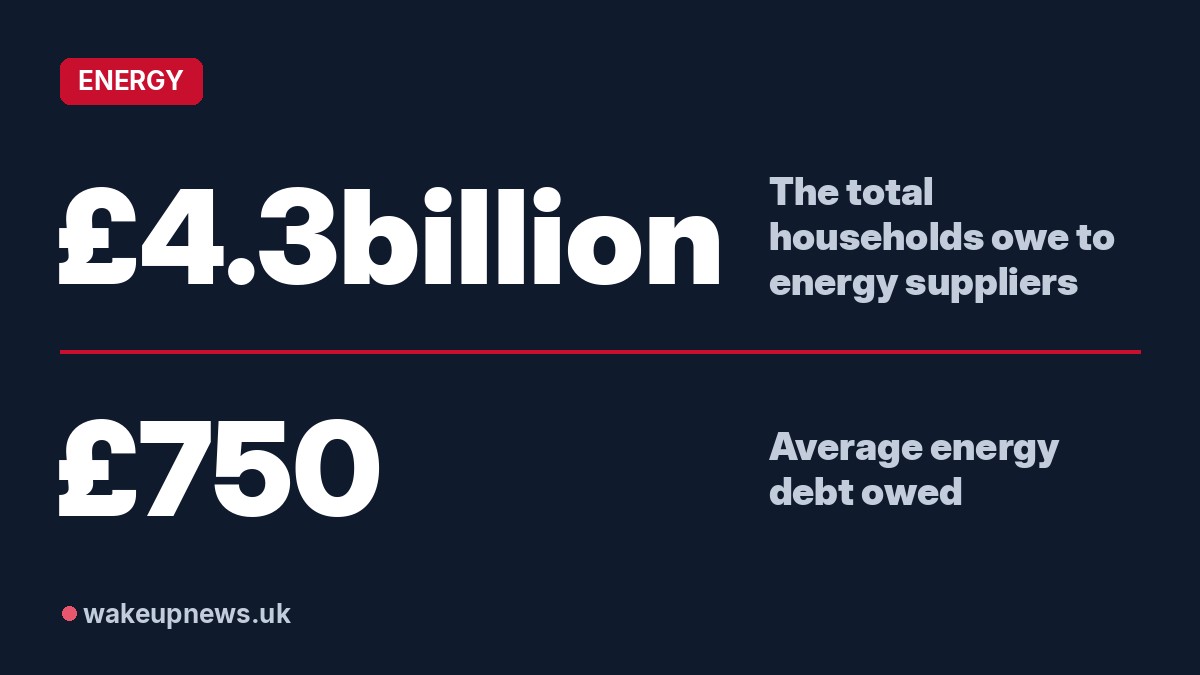
- £4.3billion: roughly what households owe to energy suppliers in total, according to the Mirror.
- Three in 10: the share of people who are in energy debt or worried about missing a payment, per the End Fuel Poverty Coalition.
- £750: the average amount owed by those in energy debt.
- 24%: the share of people in arrears who owe money to someone who makes them feel scared.
- £1,862: the yearly price cap for a typical dual fuel direct debit household from July 1.
- 79%: the rise in average energy arrears among StepChange clients over five years.
What campaigners want and what is changing
Charities are pressing the government and Ofgem to act, but no new debt relief plan has been announced in the reports. StepChange wants a tiered national social tariff, alongside an effective Debt Relief Scheme so customers who built up debt during the period of historically high prices can repay it affordably. The End Fuel Poverty Coalition wants energy companies to help pay down the debt. There is a small discrepancy in the reporting, as the Mirror gives the July cap rise as 13% while Mr Francis put it at 13.5%.
One change is already happening. According to Citizens Advice, the government is cutting VAT on household electricity bills for 6 months, so customers will not pay VAT on electricity from 1 October 2026 to 31 March 2027. Standard 5% VAT returns from 1 April 2027. Citizens Advice says the cut is applied automatically and nobody needs to apply.
What you can do now
If you are behind on your energy bills or worried about falling behind, contact your supplier early and ask about an affordable repayment plan. Ofgem's guide to getting help with your energy bills also explains what to do about back bills, prepayment meters installed without permission and how to join your supplier's Priority Services Register.
Check whether you qualify for extra help. Citizens Advice lists grants and benefits to help with energy bills, including the Warm Home Discount, Winter Fuel Payment and Cold Weather Payment or Winter Heating Payment. The help available depends on how you pay for your energy, the type of energy you use and whether you claim benefits.
Be wary of any offer that looks like an easy loan to clear a bill. If someone you owe money to makes you feel scared, a free debt charity or Citizens Advice can help you look at your options before the situation gets worse. If you get an unexpected message about the VAT cut asking for details, remember Citizens Advice says the cut is automatic.
Your questions answered
How much do households owe in energy debt
According to the Daily Mirror, households owe almost £4.3billion to energy suppliers. The figure has more than doubled since Russia's invasion of Ukraine pushed up wholesale costs. Among people in energy debt, the average owed is £750.
Who is most likely to be behind on energy bills
The End Fuel Poverty Coalition found that 45% of parents with a child under 18 and 35% of disabled people are in debt or worried about falling behind. The coalition says very few people in energy debt are in high-earning households.
Is the government doing anything about energy debt
No new debt relief scheme has been announced in the reports, and charities say there is no effective plan. StepChange wants a tiered national social tariff and a Debt Relief Scheme. Separately, Citizens Advice says VAT on household electricity bills is being cut from 1 October 2026 to 31 March 2027.
Sources
This report was written by the Wake Up News Desk from the reporting and official documents listed below. Figures are taken from these sources. Spotted an error? Email hello@wakeupnews.uk.