£3,000 a year: holiday let owners face council tax switch under Treasury review

Holiday let owners could pay between £1,000 and £3,000 a year more if the Treasury moves self-catering properties from business rates to council tax, according to the main trade body for the sector. GB News, citing The Telegraph, reports that John Healey is considering taxing holiday lets as second homes rather than as businesses. The change could hit tens of thousands of people.
The Treasury has confirmed that it is looking at the issue. In a written parliamentary answer, Paymaster General James Murray said the Treasury was reviewing "the tax treatment of short-term lets, such as self-catering accommodation". No decision has been announced, and the Treasury has declined to discuss the detail.
Tourism bosses have warned that many owners would be forced to sell up. They say pubs, restaurants and other local firms that need visitors to stay profitable would feel the knock-on effects. The trade body says many of these lets are run as a second income by retired people, so the sums involved matter.
What the Treasury is weighing up for holiday lets
A holiday let run as a business is currently taxed as a business. The option reported by GB News would make all self-catered accommodation pay council tax rather than business rates, which would in effect put holiday cottages in the same bracket as second homes. Neither report says which properties would be covered, how the new bills would be worked out or when any change could start.
The Conservatives have attacked the idea. Richard Fuller, the Shadow Chief Secretary to the Treasury, told The Telegraph that Labour had "launched a £9billion business rates raid" and was now "looking for ways to pull more and more people into scope for its crippling taxes including with a holiday cottage tax". He said Labour should focus on cutting the welfare bill "so we can cut taxes and grow our economy".
The Treasury did not deny the reports. A spokesman told The Telegraph that the Chancellor was "fully focused" on giving "families and businesses a bit of breathing space". He added that decisions on tax are set out at fiscal events, "rather than routinely commenting on rumour, speculation or proposals".
Who could pay up to £3,000 more
The people most exposed are those who own self-catering holiday lets that currently pay business rates. Alistair Handyside, chairman of the Professional Association of Self-Caterers, said the switch would cost the average owner between £1,000 and £3,000 per year. He said the average self-catering business owns 1.2 properties and is usually a second income, "often run by working mothers or retired people, who have already been hit by 25 government interventions in the past four years".
Mr Handyside warned that the sector is "already declining" and that "a lot of people will decide it’s just not worth it any more". Speaking about his own business, he said "the Government already takes more money out of my business every year than my wife and I do". The reports do not say whether any owners would be exempt or whether there would be any transition period.
He also argued that the effects would spread beyond owners. He said holiday lets provide beds in areas without the hotel capacity of London and big cities, and that pubs, restaurants and butchers in those places rely on the yearly flow of tourists. He also warned that if accommodation became scarce, families would choose to holiday in Europe and British money would be spent abroad.
Key numbers
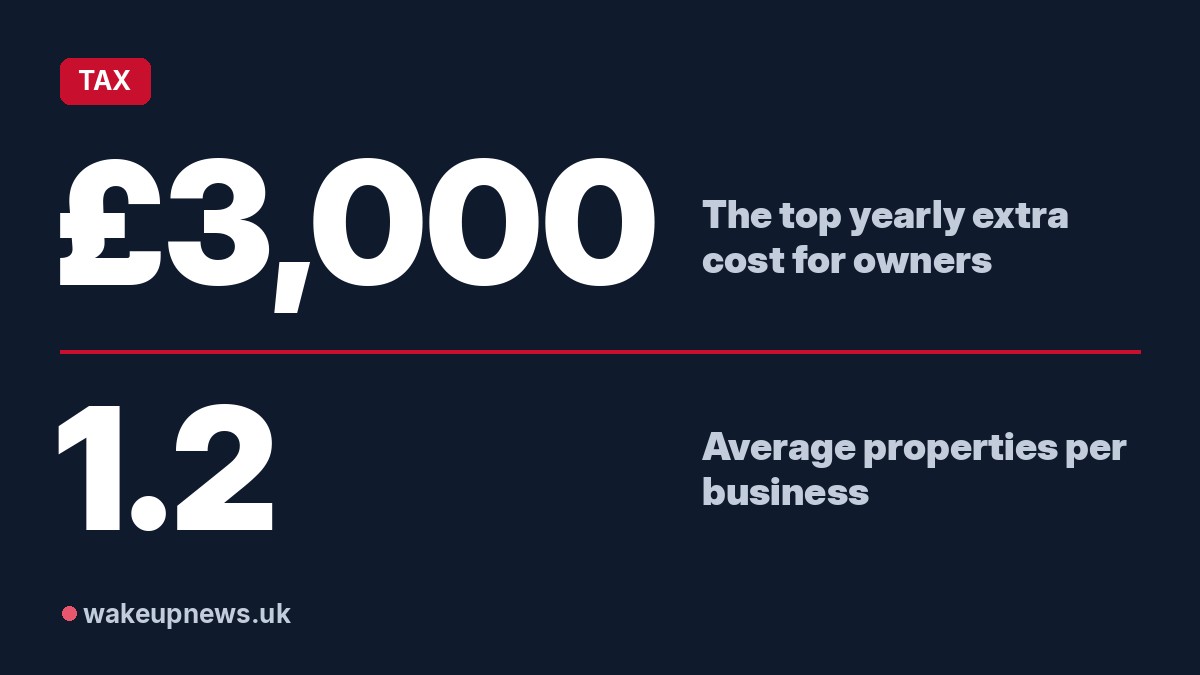
- £3,000: the top of the trade body's estimate of the extra yearly cost for an average holiday let owner.
- £1,000: the bottom of the same estimate, according to the Professional Association of Self-Caterers.
- 1.2: the average number of properties owned by a self-catering business, according to the association's chairman.
- 25: the number of government interventions the association says the sector has faced in the past four years.
- £9billion: the size of what Richard Fuller called Labour's business rates raid.
Nothing changes yet while the review runs
For now this is a review, not a policy. No formal proposal, consultation or start date has been published, and holiday let owners will keep paying in the same way until a decision is made. The Treasury's own statement suggests that any decision would be announced by the Chancellor at a fiscal event, but no date has been given for this one.
The row comes on top of other tourism tax changes. GB News reports that mayors have been given the power to set an overnight visitor levy, and some mayors have criticised it, including the Conservative Mayor of Tees Valley, Lord Houchen, who said he would "never raise taxes".
What you can do now
If you own a holiday let, start by checking how it is taxed today and how much you pay in business rates each year. That gives you a starting point for comparison if the Treasury publishes details. To see what council tax might look like, the GOV.UK guide to how Council Tax works explains valuation bands, how to work out a bill and the rules for second homes.
It is also worth finding out which council tax band your property would sit in and what your local council charges for that band. The same GOV.UK guide explains how to challenge a band you think is wrong. Bear in mind that the £1,000 to £3,000 range is the trade body's estimate, not an official figure.
If the let is a key part of your retirement income, an accountant or tax adviser can explain how your property is treated now. Watch for Treasury announcements around the next fiscal event, as that is where the Treasury says tax decisions are set out. The Professional Association of Self-Caterers is also following the review closely.
Your questions answered
Will my holiday let definitely be moved to council tax?
No. The Treasury has only confirmed that it is reviewing how short-term lets such as self-catering accommodation are taxed. Moving to council tax is one possible change, and the Treasury says it does not comment on speculation or proposals.
Where does the £3,000 figure come from?
It comes from Alistair Handyside, chairman of the Professional Association of Self-Caterers, who estimates that the change would cost the average owner between £1,000 and £3,000 per year. The Treasury has not published any figures of its own.
Who is behind the idea?
According to GB News, citing The Telegraph, John Healey is considering taxing holiday lets as second homes rather than as businesses. Paymaster General James Murray confirmed the review in a written parliamentary answer, and the Conservatives, through Richard Fuller, have opposed it.
Sources
This report was written by the Wake Up News Desk from the reporting and official documents listed below. Figures are taken from these sources. Spotted an error? Email hello@wakeupnews.uk.