Nearly 3,000 patients a day treated in NHS corridors, first official figures show
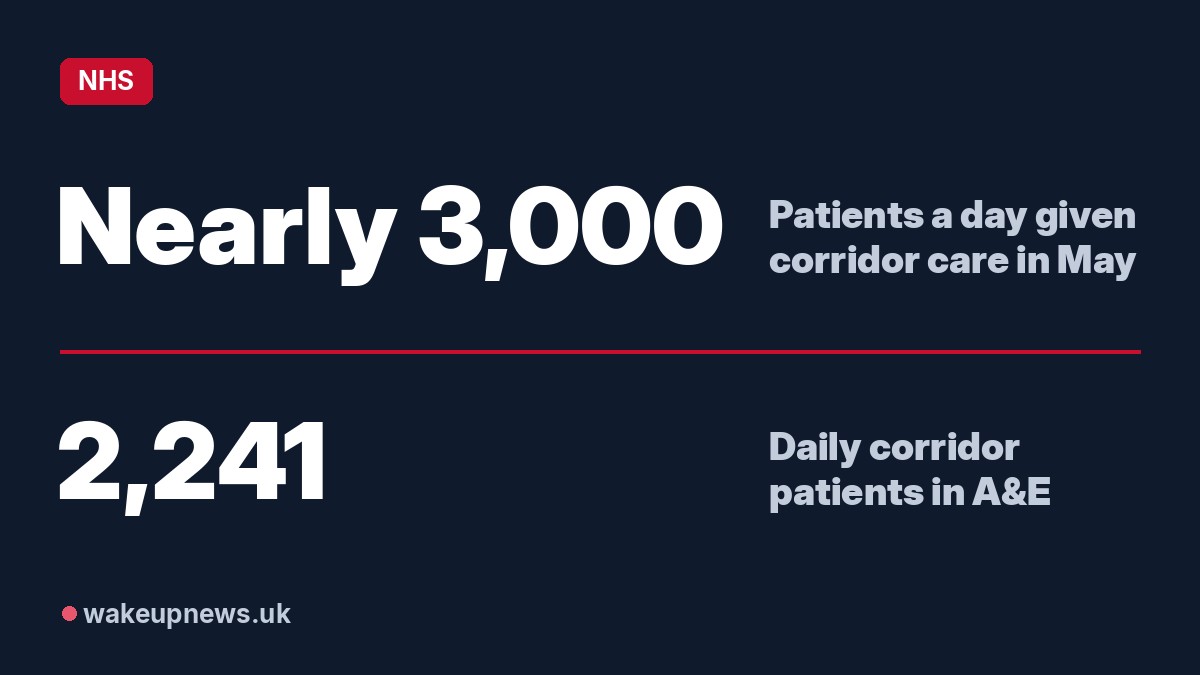
Nearly 3,000 patients a day were cared for in hospital corridors or makeshift treatment areas in England during May, according to NHS figures reported by BBC News. It is the first time data on so-called corridor care has been published. The government says it is releasing the numbers to show where the problem is worst.
Ministers have described corridor care as "unsafe" and "unacceptable". The new figures suggest it is still a regular part of hospital life in parts of England. That matters most to families who end up sitting with an elderly parent for hours in a corridor, side-room or waiting area instead of a proper bay or ward bed.
Nurses and patients have also described what the numbers mean in practice. Their accounts suggest the burden often falls on relatives, who end up doing basic care that staff cannot get to.
How the corridor care figures are counted
Under the definition used for the data, corridor care is when a patient spends more than 45 minutes being treated in an inappropriate setting, either in A&E or on wards. The BBC reports that patients have been treated in corridors, in side-rooms and even in car parks.
On average, 2,241 patients a day had corridor care in A&E in May and another 669 had it on or near wards inside the hospital. The BBC says the daily total represents 3-4% of patients who come into hospital through A&E every day. NHS England pointed out that May is not normally a month of the most acute pressure, but said it had been particularly busy because of the heatwave.
Health Secretary James Murray said corridor care was "unacceptable, undignified and has no place in our NHS" and that publishing the data would "shine a spotlight" on where problems were greatest. Royal College of Nursing general secretary Prof Nicola Ranger called the figures "alarming" and said unsafe and undignified practice was rife. Siva Anandaciva, of The King's Fund health think tank, said the figures confirmed "the scale of something that should never have been normalised in the NHS".
Which hospitals and patients are hit hardest
Corridor care is not spread evenly across England. NHS analysis found that 20 trusts accounted for more than half of the corridor care cases in A&E, and 20 trusts also accounted for more than two thirds of cases elsewhere in hospitals. The BBC report does not name those trusts.
Older patients feature heavily in the accounts given to BBC Your Voice. Suzanne said she has taken her mother, who is in her 80s, to A&E in the East Midlands five times this year, and every visit meant more than 24 hours in a corridor. She said her confused and distressed mother was only helped to the toilet or given a drink because family were there.
Kathy was sent to hospital by her GP with a suspected eye infection. She said she waited 36 hours in a chair, alone, in a hospital in the East of England before being told her blurred vision was caused by a brain tumour. Nurses who asked to stay anonymous described burnout, and one said her emergency department felt "like a war zone".
Key numbers
- Nearly 3,000: patients a day cared for in corridors or makeshift areas in England in May.
- 2,241: the average number of patients a day who had corridor care in A&E.
- 669: the average number a day who had corridor care on or near wards.
- 45 minutes: how long a patient must be treated in an inappropriate setting before it counts as corridor care.
- 3-4%: the share of daily A&E arrivals who had corridor care.
- 20 trusts: accounted for more than half of A&E corridor care cases.
What publishing the data is meant to change
The government says publishing the figures will help make sure the worst-affected trusts get the support they need. However, the BBC report gives no details of what that support will be, no target date for ending corridor care and no new money. For patients, nothing changes yet just because the numbers are now public.
Siva Anandaciva warned that the NHS has had data on long waits in other areas, including A&E, for decades, and that "it has done little to stop their rise". He called it a "positive step" to have the figures in the public domain. Whether this leads to fewer patients in corridors will depend on what happens at the small number of trusts where most cases are concentrated.
What you can do now
If you are taking an older relative to A&E, the families quoted by the BBC suggest it helps to have someone stay with them if at all possible. Suzanne said her mother was only helped to the toilet or given a drink because family were present. It is worth packing any regular medication, a written list of prescriptions, a phone charger, snacks and water, because waits can be long.
If you or a relative are being treated in a corridor or makeshift area, you can ask the nurse in charge how long it is likely to be before a proper bed or bay is free, and raise any concerns about basic care straight away. Every hospital trust has a Patient Advice and Liaison Service, usually called PALS, which can deal with a concern while you are still there or take a complaint afterwards.
Write down dates, times and what happened while it is fresh in your mind, because this makes a complaint much easier to follow up. You can also tell your MP about your experience, or share it with BBC Your Voice, which collected the accounts in this story.
Your questions answered
What exactly counts as corridor care?
According to the BBC, it is when a patient spends more than 45 minutes being treated in an inappropriate setting, either in A&E or on a ward. That can mean a corridor or a side-room, and there have been reports of patients being treated in car parks.
Is my local hospital one of the worst?
NHS analysis found that 20 trusts accounted for more than half of A&E corridor care cases, but the BBC report does not name them. The Health Secretary said the data is being published to show where the problems are greatest, so look out for trust-level figures from NHS England.
Why were the May figures so high?
NHS England said May is not normally one of the months with the most acute pressure, but it was particularly busy because of the heatwave. The Royal College of Nursing said the figures showed that unsafe and undignified practice was rife.
Sources
This report was written by the Wake Up News Desk from the reporting and official documents listed below. Figures are taken from these sources. Spotted an error? Email hello@wakeupnews.uk.