Is Carer's Allowance means tested? The £204 earnings limit, tax and pension rules for 2026/27
Carer's Allowance is not means tested, so your savings, your partner's income and any private pension do not count. The test that does apply is an earnings limit of £204 a week from your own work, after tax, National Insurance and allowable expenses. The 2026/27 rate is £86.45 a week, and it is taxable income.

| What | Amount |
|---|---|
| Weekly rate | £86.45 |
| Every 4 weeks | £345.80 |
| Monthly equivalent | £374.62 |
| Yearly | £4,495.40 |
| Earnings limit | £204 a week after tax, National Insurance and expenses |
| Care needed | At least 35 hours a week |
| Universal Credit carer element | £209.34 a month |
| Pension Credit extra amount for carers | £48.15 a week |
Is Carer's Allowance means tested
No. The Independent Review of Carer's Allowance Overpayments, published by the Department for Work and Pensions, says plainly that Carer's Allowance is not means tested and is not based on National Insurance contributions. Savings, a partner's wages and a works or private pension play no part in whether you qualify or how much you get.
What catches people out is that Carer's Allowance does have one money test, the earnings limit. Your own earnings from a job or self-employment must be £204 a week or less after tax, National Insurance and allowable expenses. The review explains that the limit is a rough check that you still have time to give at least 35 hours of care a week, which is why going over it by even a penny means no Carer's Allowance for that week.
How much is Carer's Allowance in 2026/27
The rate from April 2026 is £86.45 a week, up from £83.30 in 2025/26. You can be paid weekly in advance or every 4 weeks, and a four-weekly payment is £345.80. Over a year that is £4,495.40, or about £374.62 a month. You do not get more for caring for more than one person.
To qualify you must be 16 or over, care for at least 35 hours a week, not be in full-time education, and meet the earnings limit and residence rules. The person you care for must already get a qualifying disability benefit, such as the daily living part of PIP, Attendance Allowance, the middle or highest care rate of Disability Living Allowance, or the daily living part of Adult Disability Payment. You do not have to be related to them or live with them.
For each week you get Carer's Allowance you also receive Class 1 National Insurance credits, which protect your State Pension. If you care for at least 20 hours a week but cannot get Carer's Allowance, Carer's Credit can still fill gaps in your National Insurance record.
You cannot claim Carer's Allowance for looking after yourself, because it is paid to the person doing the caring. If you are the one with the illness or disability, look at PIP if you are under State Pension age or Attendance Allowance if you are over it. Getting PIP yourself does not stop you claiming Carer's Allowance for caring for someone else.
How much can you earn on Carer's Allowance
The earnings limit for 2026/27 is £204 a week, up from £196 in 2025/26. The government has linked it to 16 times the hourly National Living Wage. Social Security Scotland, which applies the same limit, says it works out at about £884 a month or £10,608 a year.
Your earnings are any income from employment and self-employment after tax, National Insurance and expenses. GOV.UK lists these as expenses you can take off.
- 50% of your pension contributions.
- Equipment you need for your job, such as specialist clothing.
- Travel between workplaces that your employer does not pay for.
- Business costs if you are self-employed.
- Paid care for the disabled person or your children while you work, up to 50% of your earnings, if the carer is not your spouse, partner, parent, child or sibling.
Some money does not count as earnings at all, including payments from an occupational or private pension, contributions towards living costs from someone you live with, the first £20 a week from a boarder plus 50% of the rest, and a loan or advance from your employer.
Joan, an invented carer, takes home £250 a week after tax and National Insurance, before her pension. On that figure alone she would be over the limit. She pays £40 a week into a workplace pension, so £20 comes off, and she pays a friend £60 a week to sit with her father while she is at work, which is well under half her earnings. Her earnings for Carer's Allowance are £170 a week, comfortably under £204.
If your pay goes up and down, the DWP can average your earnings over a period that reflects your pattern of work. Its response to the overpayments review says the averaging guidance used by decision makers has been updated and that letters will explain how averaging was done.
Is Carer's Allowance taxable
Yes. HMRC lists Carer's Allowance, and Carer Support Payment in Scotland, among the state benefits you pay Income Tax on. It is paid without tax taken off, and you pay tax on it if your income is over the Personal Allowance, which is £12,570 in 2026/27. On its own Carer's Allowance comes to £4,495.40 a year, so it only creates a tax bill when added to other taxable income such as wages, a private pension or the State Pension. Any tax due is normally collected through the tax code on your job or pension.
Ray, an invented 60-year-old, retired early on a works pension of £10,000 a year and cares for his wife. The pension does not count towards the earnings limit, so he gets the full £86.45 a week. For tax, his income is £14,495.40, which is £1,925.40 over the Personal Allowance, so at the 20% basic rate he owes £385.08 for the year, usually through the tax code on his pension.
The Personal Allowance is frozen until April 2031, so more carers with a part-time job or small pension will see part of their Carer's Allowance taxed. Our report on the £12,570 tax threshold freeze to 2031 explains more.
Carer's Allowance and the State Pension
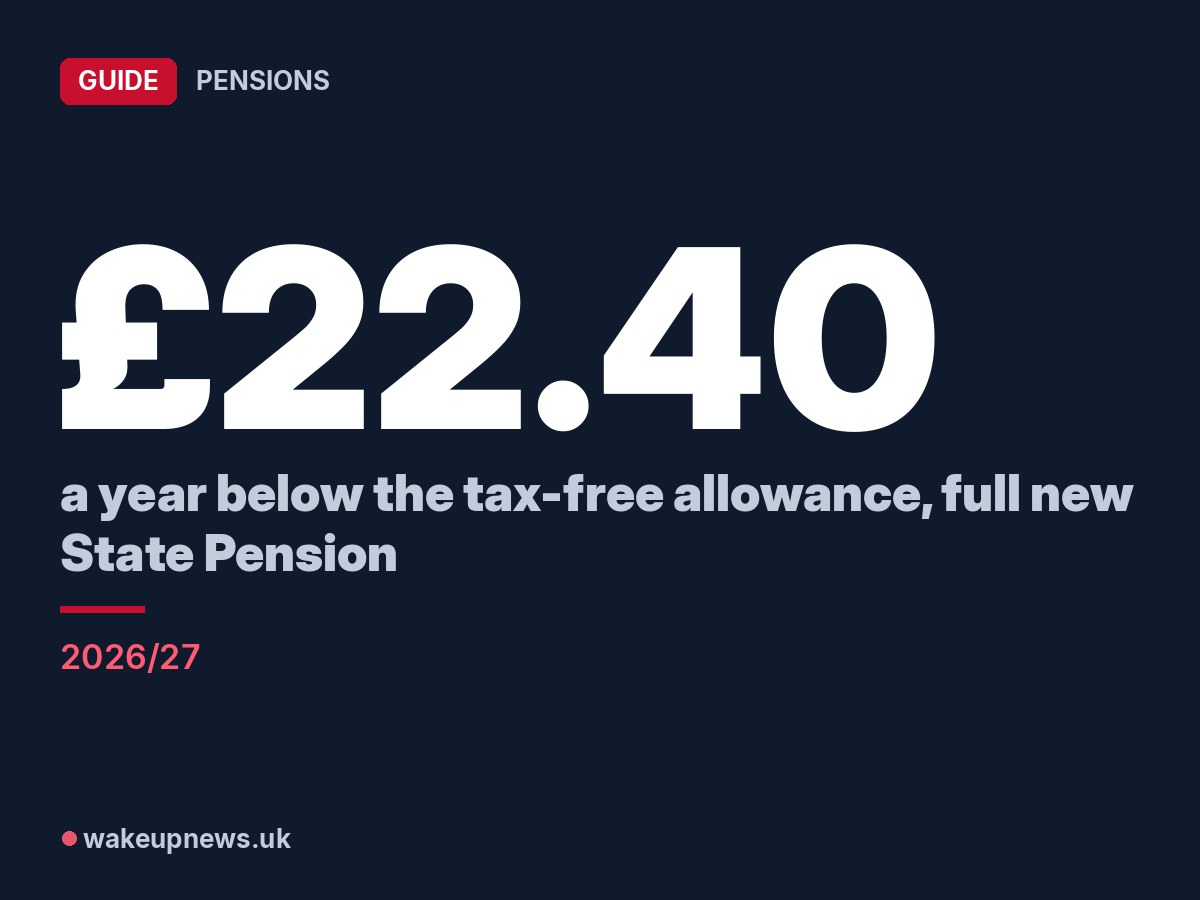
This is the rule that surprises most older carers. You cannot get the full amount of both Carer's Allowance and your State Pension. If your State Pension is £86.45 a week or more, you will not get a Carer's Allowance payment, and if it is less, Carer's Allowance tops it up to £86.45. The full new State Pension is £241.30 a week in 2026/27 and the full basic State Pension is £184.90, so anyone on a full State Pension is paid nothing.
Claiming can still be worth it. If you are eligible but not paid because your pension is higher, you have what is called underlying entitlement. GOV.UK confirms that this adds an extra amount for carers of £48.15 a week to Pension Credit, including when you have claimed Carer's Allowance but are not paid because another benefit pays more. Check whether you could get Pension Credit with the Pension Credit calculator.
Elsie, an invented carer over State Pension age, has a State Pension of £60.00 a week because of gaps in her National Insurance record. Carer's Allowance tops it up by £26.45 a week to £86.45. Had her pension been £184.90, she would get no Carer's Allowance payment, but if she qualified for Pension Credit it would rise by £48.15 a week.
Check how a claim affects the person you care for before you apply. When you get Carer's Allowance, they will usually stop getting a severe disability premium or the extra amount for severe disability in Pension Credit. The Pension Service Helpline or their council can tell you if this applies.
Near pension age, note that you cannot build up extra State Pension by deferring during any period you get Carer's Allowance. Other benefits change at State Pension age too, which we cover in benefits that stop the day you reach State Pension age.
Carer's Allowance and Universal Credit
If you get Universal Credit, it is reduced by an amount equal to your Carer's Allowance, so claiming does not usually raise your household income. Universal Credit can include a carer element of £209.34 a month if you care for at least 35 hours a week for someone getting a qualifying disability benefit, whether or not you get Carer's Allowance. It is not added automatically, so report your caring in your journal.
Carer's Allowance is still worth having alongside Universal Credit. It gives Class 1 National Insurance credits, which help you qualify for some other benefits as well as the State Pension, while Universal Credit gives Class 3 credits that count towards the State Pension only. Getting the carer element also means the benefit cap does not apply to your household.
Carer support in Scotland and Northern Ireland
In Scotland, new claims go to Carer Support Payment, run by Social Security Scotland. It pays up to £86.45 a week with the same £204 earnings limit, plus two extras that Carer's Allowance does not have.
| Payment | Amount | Notes |
|---|---|---|
| Carer Support Payment | Up to £86.45 a week | Reduced if you get the State Pension or certain other benefits |
| Scottish Carer Supplement | £11.70 a week | Paid automatically on top, has replaced Carer's Allowance Supplement for most carers |
| Carer Additional Person Payment | £10.40 a week | For each additional person you care for who gets a qualifying benefit |
| Carer's Allowance Supplement | £304.65 in June and £304.65 in December 2026 | Now only for a small number of people who do not get Scottish Carer Supplement |
Carer Support Payment is paid every 4 weeks, at the end of the 4 weeks. People with underlying entitlement can be awarded £0, and then they cannot get Scottish Carer Supplement or Carer Additional Person Payment either. If you move between Scotland and England or Wales you need to make a new claim, because your old payment stops.
In Northern Ireland, Carer's Allowance is paid at the same £86.45 rate with the same £204 earnings limit. nidirect says most claims can be backdated three months, and people over State Pension age use form DS700(SP).
If you go over the earnings limit or get overpaid
Going over £204 in a week, even by a small amount, means no Carer's Allowance for that week unless your earnings are averaged. Report changes straight away, including starting a job, a change in income or the person you care for losing their disability benefit. If you get Universal Credit too, keep our list of changes you must tell the DWP about.
If you are paid too much because you did not report a change, gave wrong information or were overpaid by mistake, you may have to pay it back. If you still get benefits, your regular payment is reduced until it is repaid, and DWP Debt Management can talk you through what you can afford.
There is better news for people caught out in the past. After the independent review found that DWP guidance on averaging earnings had been wrong, the DWP is reassessing Carer's Allowance overpayments from between 10 April 2015 and 2 September 2025. If you were affected you may get a refund or have your debt reduced or cancelled. You do not need to contact the Carer's Allowance Unit, because the DWP will contact you.
Looking ahead, the government says it is exploring an earnings taper to replace the cliff edge but that this is likely to be several years away. Rates and the earnings limit normally change each April, and the 2026/27 figures were set out on 26 November 2025, so the next set is normally announced around the same time of year. You can apply for Carer's Allowance online and backdate a claim by up to 3 months.
Frequently asked questions
Is Carer's Allowance means tested?
No. Carer's Allowance is not means tested, so savings, your partner's income and private pensions are ignored. The only financial test is the earnings limit, which means your own earnings from work must be £204 a week or less after tax, National Insurance and allowable expenses in 2026/27.
How much can I earn on Carer's Allowance?
You can earn up to £204 a week in 2026/27, after tax, National Insurance and allowable expenses such as half your pension contributions and some care costs. That is about £884 a month. Earn more than £204 and you lose the whole allowance for that week.
How much is Carer's Allowance?
Carer's Allowance is £86.45 a week from April 2026. Paid every four weeks that is £345.80, or about £374.62 a month and £4,495.40 a year. You get the same amount however many people you care for, and it can be reduced if you get the State Pension.
Is Carer's Allowance taxable?
Yes. Carer's Allowance is taxable income, although it is paid without tax taken off. You only pay tax if your total taxable income, including wages and pensions, is over the £12,570 Personal Allowance. HMRC usually collects any tax by adjusting the tax code on your job or pension.
Can I claim Carer's Allowance for myself?
No. Carer's Allowance is paid to someone who spends at least 35 hours a week caring for another person who gets a qualifying disability benefit. If you need care yourself, look at PIP if you are under State Pension age or Attendance Allowance if you are over it.
Can I get Carer's Allowance and State Pension together?
Not in full. If your State Pension is £86.45 a week or more, you will not be paid Carer's Allowance, but you may have underlying entitlement. That can add £48.15 a week to Pension Credit if you qualify for it, so it can be worth claiming even when no Carer's Allowance is paid.
Sources
- GOV.UK, Carer's Allowance, accessed 2 October 2026
- Department for Work and Pensions, Benefit and pension rates 2026 to 2027, accessed 2 October 2026
- Department for Work and Pensions, Independent Review of Carer's Allowance Overpayments, accessed 2 October 2026
- Department for Work and Pensions, Government response to the Independent Review of Carer's Allowance Overpayments, accessed 2 October 2026
- GOV.UK, Tax-free and taxable state benefits, accessed 2 October 2026
- GOV.UK, Income Tax rates and Personal Allowances, accessed 2 October 2026
- GOV.UK, Universal Credit: what you'll get, accessed 2 October 2026
- GOV.UK, Pension Credit: what you'll get, accessed 2 October 2026
- GOV.UK, Benefit overpayments, accessed 2 October 2026
- mygov.scot, Carer Support Payment, accessed 2 October 2026
- mygov.scot, Carer Support Payment if you work, accessed 2 October 2026
- mygov.scot, Carer's Allowance Supplement, accessed 2 October 2026
- nidirect, Carer's Allowance, accessed 2 October 2026
How we check this guide. Every figure is checked against the official sources listed above, and the guide is updated when rates or rules change.