£1.3bn stolen by scammers in a year as AI drives four million fraud cases
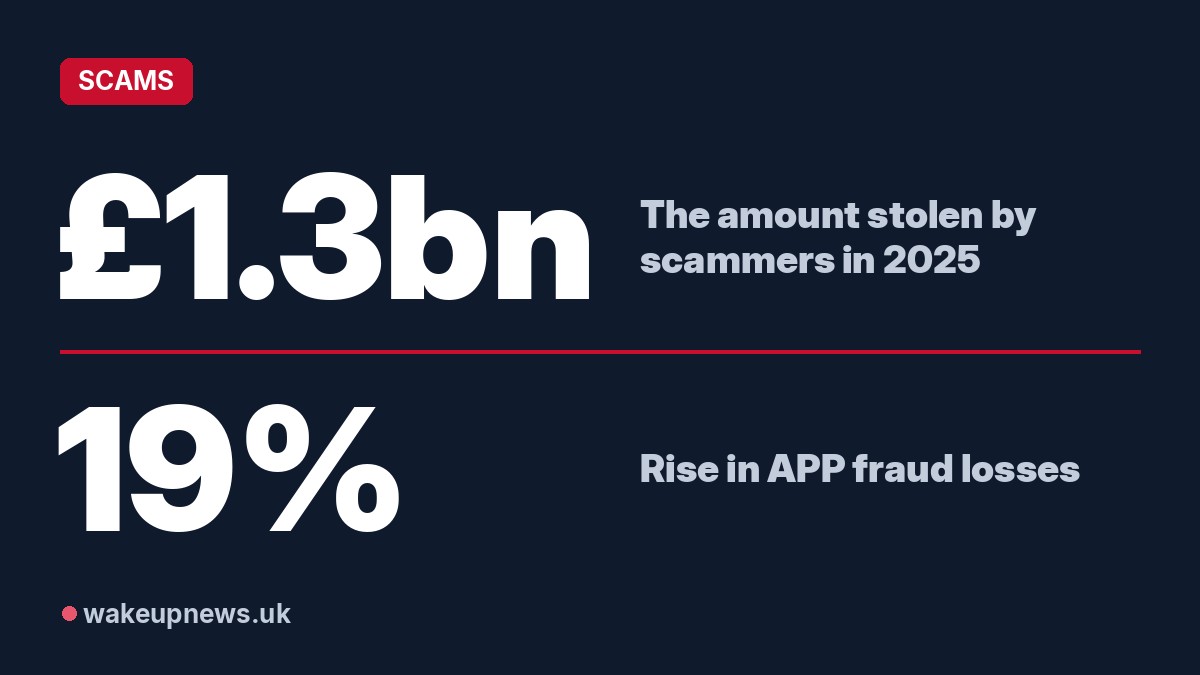
Fraudsters stole almost £1.3bn from people in the UK in 2025, according to an annual report from the banking trade body UK Finance, with more than four million cases logged in which victims actually lost money. That is nearly eight cases on average every minute, the BBC reported, and the total has climbed by more than one million in two years.
Banks blame criminals who are using artificial intelligence (AI) to work faster, at bigger scale and with more sophistication, from cloned voices to fake romantic partners. UK Finance said the problem could only be tackled if technology companies stepped up monitoring and security on their platforms, and banks described fraud as "a national security threat" because of the harm to victims and the huge sums taken by organised gangs.
Even those figures may understate the damage. Experts believe most scams are never reported, so they do not show up in the statistics at all.
How AI and fake romances are driving the rise
According to the banks, criminals have used AI to copy the voices of celebrities and even of victims' own family and friends. UK Finance said this lets gangs run scams at far greater volume, often catching people at a vulnerable moment, even when they would never have thought of themselves as easy targets.
Romance fraud runs right through the report. Fraudsters set up fake profiles on social media and dating sites to meet and groom victims who believe they are in a loving relationship, and UK Finance said one example involved a fraudster marrying a victim so the stealing could carry on. Paul Davis, head of economic crime at Barclays, said the impact "goes beyond financial loss" and can leave victims "burdened by guilt and shame".
Ruth Ray, managing director of economic crime at UK Finance, put it bluntly: "One click and you can lose your life savings." She said the financial sector invests heavily in protecting customers but "cannot be the only line of defence", and called for "stronger, enforceable responsibilities" on social media channels and online marketplaces. That could include tougher rules on removing fraudulent adverts, checks on sellers and secure payment systems, she said.
Who is being targeted and who gets their money back
The BBC has spoken to people on the receiving end. Julie Osgood, 60, said the first four men she was matched with when she tried out a dating site were all potential fraudsters. She spotted the warning signs before she was tricked, but the BBC noted that many thousands of others have not been so lucky.
Kirsty Guest, a florist from North Yorkshire, lost £80,000 after meeting a man calling himself Patrick on a dating app. The relationship built up over months, but "Patrick" was a scammer using photos of a completely innocent man, and after claiming he had been in an accident on a work trip he tricked her into sending thousands of pounds. "They're intelligent in what they're doing," she told the BBC.
For people tricked into transferring money themselves, known as authorised push payment (APP) fraud, most victims now have a legal right to a refund from their bank. But APP losses rose by 19% last year, according to the report, and 12% of the money stolen this way was not reimbursed.
Key numbers
- £1.3bn: almost this much was stolen by scammers in 2025, according to UK Finance.
- More than four million: the number of reported cases last year in which money was actually lost.
- Nearly eight: the average number of these cases every minute.
- More than one million: the rise in the number of cases over two years.
- 19%: the increase in losses from authorised push payment fraud last year.
- 12%: the share of money stolen through APP fraud that was not paid back to victims.
- 11%: the fall in impersonation fraud, where criminals pose as a bank, the police or another organisation.
What happens next on rules for tech firms
For now, the call for tougher duties on tech companies is only a demand from the banking industry. UK Finance wants enforceable responsibilities placed on social media and online marketplaces, but the reports do not set out any new law, timetable or consultation, so nothing changes for consumers yet.
Meanwhile criminals keep adapting. When the report was published, experts predicted a surge in scams linked to the men's football World Cup, while a few older tricks were fading, including impersonation fraud, which fell last year.
What you can do now
If you think you have sent money to a fraudster, contact your bank straight away and ask whether your loss is covered by the refund rules for authorised push payment fraud. Most victims now have a legal right to be reimbursed, but the figures show not everyone gets their money back, so keep copies of messages, payment details and dates to support your claim.
Be very wary of anyone you have met online, however long you have been talking, who asks for money after a sudden emergency such as an accident on a work trip. Because AI can now copy voices, if a call that sounds like a relative or friend asks for urgent money, hang up and ring them back on a number you already know.
Treat any request to move your money to a so-called "safe account" as a serious warning sign, because this is the classic trick used by criminals posing as a bank, the police or another organisation. Even if you spot a scam and lose nothing, telling your bank about it helps, since experts believe most scams go unrecorded.
Your questions answered
Will my bank refund me if I am scammed?
If you were tricked into transferring the money yourself, known as APP fraud, most victims now have a legal right to a refund from their bank, the BBC reported. But the report found 12% of money stolen this way was not reimbursed, so a refund is not guaranteed in every case.
Why are scams getting harder to spot?
Banks say criminals are using AI to mimic voices, including those of victims' family and friends, and to run scams at much greater volume. Romance fraudsters also use stolen photos and fake profiles, and may groom victims over months before asking for money.
Are any types of fraud falling?
A few are. The report shows impersonation fraud, where criminals pose as a bank, the police or an organisation to get victims to move money to a "safe account", fell by 11% last year. Overall, though, cases rose by more than one million in two years.
Sources
This report was written by the Wake Up News Desk from the reporting and official documents listed below. Figures are taken from these sources. Spotted an error? Email hello@wakeupnews.uk.